
USA Hockey DL Schedules: What Families Can Expect
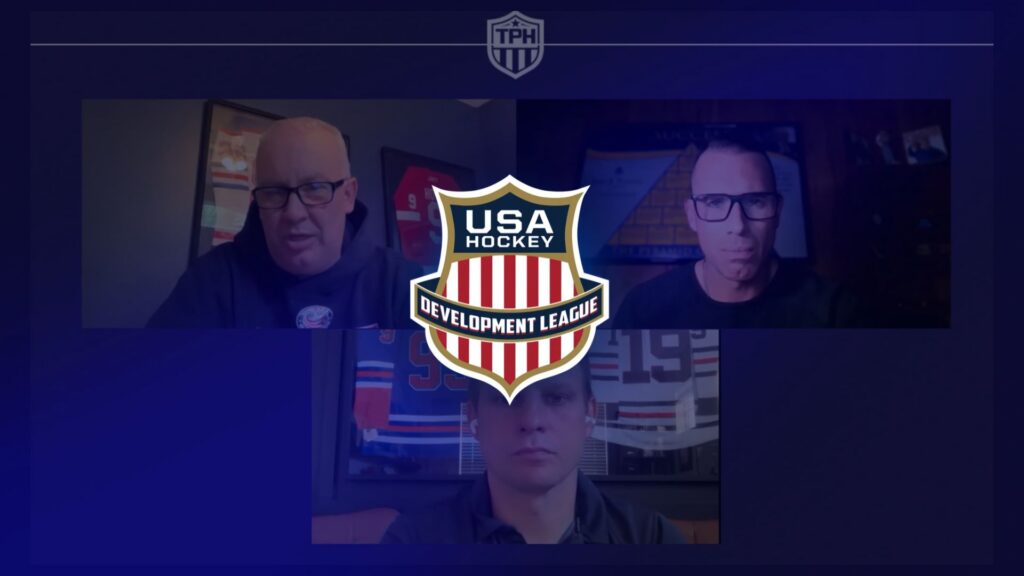
In the latest episode of The Impact Player Podcast, TPH Academy Chief of Operations and Development Francis Anzalone discusses everything about the USA Hockey National Development League, commonly known as "The DL."
Starting at 24:06 in the episode, host Francis Anzalone asks Jordan Pietrus of the Colorado Thunderbirds and TPH Academy Denver how his organization’s schedule might take shape.
Pietrus explains that families may see continuity with existing competitive schedules, along with adjustments that support long-term player development. His comments reflect expectations at the time of recording, with specific schedules still taking shape.
How Much of the Schedule Will Be Against DL Teams?
Anzalone opens with his understanding that 60% of a team’s schedule would be played against other USA Hockey Development League clubs. His question focuses on the remaining 40%: Who would teams play, and how would those games fit into the season?
Pietrus expects the answer to depend partly on the age classification. A 15U DL schedule could include different opportunities than a 17U DL schedule.
What Could a 15U DL Schedule Look Like?
At the 15U level, Pietrus identifies opportunities to compete against 16U Tier I teams in addition to DL opponents. For the Colorado Thunderbirds, that could include competition within the local market.
Those matchups could help fill the portion of the schedule outside DL competition, giving teams additional options when building their season. The specific mix of opponents would depend on each organization’s plans.
What Could a 17U DL Schedule Look Like?
Pietrus anticipates that most 17U DL teams could play a higher percentage of their games against other DL opponents.
Families should therefore expect potential differences between the two age groups. While the discussion uses a 60% DL opponent share as its starting point, Pietrus suggests that 17U teams may exceed that percentage.
Will Team Schedules Change Significantly?
For the Colorado Thunderbirds, Pietrus does not anticipate a dramatic overhaul.
The Thunderbirds already play a competitive schedule through the Tier 1 Elite League and face many organizations entering the DL. Existing league competition, along with games outside that league, could provide opportunities to meet DL opponents.
Some adjustments may follow, but Pietrus expects much of the Thunderbirds’ existing schedule structure to carry forward. His outlook is specific to his organization; other clubs may approach scheduling differently.
Why Weekends Off Matter in a Development Schedule
Pietrus emphasizes looking at the full season when building a schedule, including giving players weekends off and considering their development across multiple years.
That approach also accounts for preparing players’ bodies off the ice and helping them adapt to travel demands as they move toward their next level of hockey.
For families, this offers a useful way to evaluate a proposed DL schedule: consider how competition, physical preparation, travel, and time off work together to support the athlete’s development.
What Should Families Ask About Their DL Schedule?
As clubs finalize their plans, families can ask:
- What percentage of our games will be against DL opponents?
- Which additional opponents are being considered for our age group?
- How will the schedule differ from the club’s current season?
- Where will weekends off and physical preparation fit into the calendar?
- How will the team manage travel demands throughout the season?
Supporting DL Players and Organizations Beyond the Ice
A development-focused hockey schedule needs an academic plan that can keep up. TPH Academy helps DL players balance coursework, training, and travel through flexible online academics, NCAA-approved coursework, individualized guidance, tutoring, and ongoing progress monitoring. Student-athletes gain the flexibility to pursue their next opportunity while staying accountable and continuing to progress in school.
For DL organizations, TPH offers online academics for rostered players and a team-based academy model with a dedicated learning environment, an on-site Academic Success Coach, and leadership and mentorship opportunities. Explore USA Hockey Development League: Supporting Your Team Beyond the Ice to learn how these options can support your club.
As the Primary High School Academic Provider of the USHL, TPH Academy Online Powered by Subject also provides an academic foundation that can stay with players as they advance. Read The DL and USHL Relationship: Understanding the Pathway to learn how academic continuity supports that transition. tphacademy.com
Whether you are planning for one player or an entire roster, TPH Academy helps build the structure and support to pursue academic and athletic goals without compromise. Explore our DL teams and locations guide and the TPH Academy Resource Center for more information.
Watch the scheduling discussion beginning at 24:06, and explore the TPH Academy Resource Center for more information about the USA Hockey Development League.
About TPH Academy
TPH Academy is an international, academy-style environment where dedicated student-athletes study, train, and play at their highest potential. TPH Academy’s core purpose is to advance — in and beyond the game — the next generation of impact players. Through a flexible, accredited academic model, on-site academic support, individualized planning, world-class coaching, and sport-specific training, TPH Academy equips student-athletes with the structure and support to pursue excellence without compromise. Learn more in the TPH Academy Impact Report.